By: Emily Kopp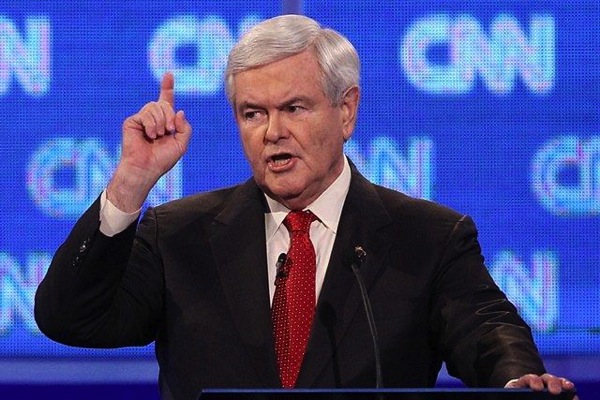
The capricious public has adopted and abandoned Republican primary candidates in recent weeks with the rapidity of the ficklest lover. Only one target, though, seems damned to forever draw voters’ ire—the news media. For every fatalist who argues the internet will eventually render professional outlets obsolete, you’ll find another naysayer, wagging his finger at the “media elites” for degenerating the nation’s policy discourse. To be both irrelevant, and the source of all of the country’s problems—that is the news media’s curse.
Newt Gingrich has championed the anti-media crusade to popular approval more than any other candidate. In a much lauded exchange with Jon King of CNN last week, Gingrich berated the moderator for asking him a question about his ex-wife and decried the media in general as a “destructive” and “vicious” force in politics. The momentum of this three minute tongue lashing carried Gingrich through the debate and to the top of tally sheet at the South Carolina primary.
Let’s set aside the shaky reasoning behind beginning a primary debate with a question about what can only be described as a scandal, (namely, a scandal involving the phrase “Open Marriage,” also known as Facebook’s weirdest, scummiest relationship status), rather than a question about a policy issue. Gingrich took CNN to task, and reaped the rewards of the public’s shared exacerbation, disdain even, for the media. Is the “24 hour news cycle” indeed prurient, negative, and partisan? In recent years, these criticisms have grown louder, more prevalent, and have found a larger audience. At the Rally to Restore Sanity and/or Fear in 2010, Jon Stewart characterized popular media as a “24-hour political pundit perpetual panic conflictinator” to the cheers of a 200,000 member audience. Mistrust of the media, it seems, knows no party lines. This characterization marks a steep fall from when journalism was heralded as the vital, democracy-bearing “fourth estate.”
So is journalism just getting worse? Could be. Traditional media outlets like cable news and print newspapers have felt significant financial strain in recent years. The economic downturn should shoulder some of the blame, but no doubt most of the trouble involves the growing pains of adapting to a digital age. But have shrinking budgets been dire enough to compromise journalistic ethics? One might argue financial problems drive writers to blur the lines between right-to-know, public information, and private, prurient tabloid fodder. While it makes sense, this argument forgets that political sex scandals, like apple pie and baseball, are an American tradition. Look no further than Walker Sex Scandal Scale for proof. The only practice as well-established in American media as peering into our politician’s bedrooms is the perpetual debate about whether or not we should cover our eyes.
While it would be easy to chalk up the popularity of Gingrich’s media bashing as just another kooky idea driven by his force of personality, I think the Jon King moment, a historic one by some accounts, bears some serious attention. Not all journalists perform ethically, and no one would argue that a sex scandal should be reported with the same weight as information that reflects more directly on a candidate’s capacity for being president. However, I think we have to be vigilant about scapegoating the media for bad news. Appealing to you as a future journalist, I have to invoke the “don’t shoot the messenger” argument here. Supporting the writers who bring you the stories that matter means occasionally tolerating coverage of the stories that don’t.